Operating environments
Five working scenarios
Start from your site conditions, then match capacity, power, tires and mast height. The cold storage card opens the fully worked example.
Cold Storage & Freezer Warehouses
Sub-zero rooms cut battery capacity exactly when throughput peaks, and continuous shifts leave no window for a full charge. Enclosed food-storage areas rule out diesel exhaust, so the fleet runs electric from dock to freezer aisle.
Warehousing & Logistics
Racking height and shift pattern drive the specification: walkie equipment at the dock, counterbalance trucks in the aisles. Multi-shift operations that cannot pause for a full charge point to lithium opportunity charging.
Ports & Heavy Industry
Pallet weights above 3,000 kg sit beyond electric counterbalance capacity, and yard duty runs long outdoor cycles in ports and steel mills. Non-palletized cargo such as paper and textile rolls calls for rotating clamps instead of standard forks.
Construction Sites
Unpaved ground, ramps and loose debris defeat smooth industrial tires and yard-truck traction. 4WD with 30% gradeability keeps loads moving where a warehouse-specified truck stalls.
Farms & Ranches
Field tracks and lumber yards demand construction-site traction, and seasonal peaks compress a year of handling into a few weeks. One rough-terrain platform covers both duties, which simplifies parts stock for mixed fleets.
More application pages are being added — contact us for a scenario not yet listed.
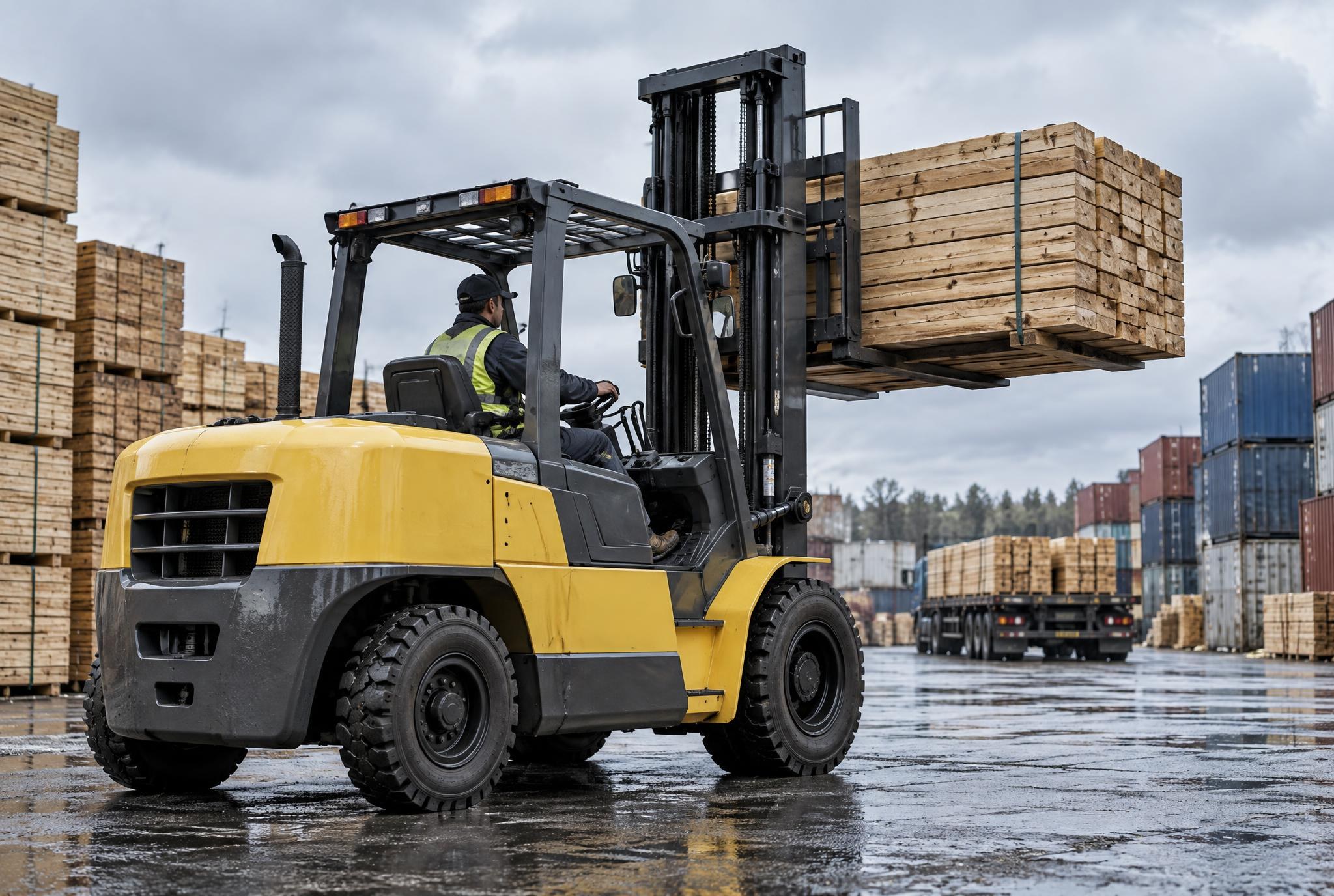
Outdoor & Rough Terrain
Solid tires, raised clearance, built for uneven ground
Lumber yards, container yards and construction sites call for a different machine than a warehouse floor — the RT Series is built around that difference, not a modified warehouse unit.